Best Acessory for Filter Users | Manfrotto Xume Quick Release Adapters


Lens filters are pretty straight forward. The majority of them get screwed onto the front filter thread of a lens. This approach to mounting a filter works, but is not the most efficient. To me, this is one of those things that has been so widely implemented that no manufacturer dares to diverge from the norm, even if there is a better solution. That better solution may just be the Manfrotto Xume Quick Release Adapters.

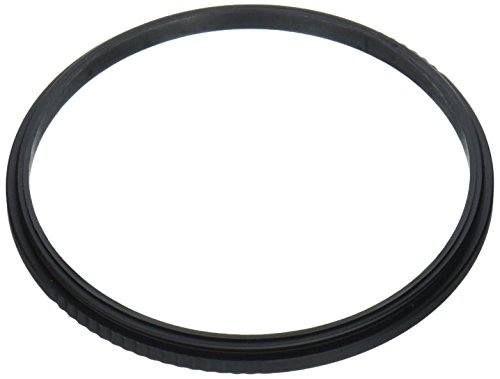
The Xume adapters consist of two different pieces, the lens adapter (attaches to your lens’ front filter thread) and the filter holder (attaches to the back of the filter). These two parts create a magnetic connection between each other and when installed to your lens and filter, it allows you to magnetically install your filters with little effort. The magnetic connection has just the right amount of strength to hold a filter in place without it falling off and still allows you to easily take the filter off when need be.

But just how strong is the connection? What if you don’t use just one filter, but an entire filter system? In the video above, I showed the use of the Xume adapters with my Wine Country Camera filter holder. This is a high quality filter holder and with that quality comes weight as the holder is made entirely from metal and wood. The Xume adapters can efficiently hold my filter system, a circular polarizer and 3 additional solid ND filters. I can still also rotate the adapters and my filter holder around for times when I’m using an ND grad and of course take it on and off with ease. Needless to say, these adapters can hold anything that I would possibly need.

Although the Xume adapters are great, I do have one complaint. The Xume system simply does not allow you to use conventional lens caps. The Xume lens adapter is very thin and there is just not enough space for a lens cap to catch on and stay in place. There are specific Xume lens caps that you can buy that works with the lens adapter but from my research, it seems like these caps are only available in certain sizes. For example, my most used lens has a 82mm front filter thread so I bought the 82mm Xume adapter rings. When I tried to find and buy the 82mm Xume lens cap, it was like it’s nonexistent. I couldn’t find it anywhere, even from the manufacturer. 

To solve this problem, what I’ve done is bought a screw on lens caps (which would typically screw on to the front filter thread of a lens) and combined this with another Xume filter holder ring. This essentially turns the screw on lens can into a magnetic lens cap. Now, this work around functions just fine but it does cost some money. You have to buy the screw on lens cap and another lens adapter ring and that may cost more than the Xume branded lens cap if they were to make it.

But overall, the Xume is something that I do enjoy and would definitely recommend if you use filters a lot. It’ll save you a lot of time.

Manfrotto Xume https://amzn.to/2RCqgTT

Manfrotto Xume Lens Cap https://amzn.to/2C7M28f

Screw on Lens Cap https://amzn.to/2SLoDAS

Wine Country Camera Filter System https://amzn.to/2ReZe5M


Want to support my work?
Consider visiting the shop and buying "Absolutely Nothing"
https://www.TheUpperLeftUSA.com/shop/absolutely-nothing

or

Become a Patron!
https://www.patreon.com/HaiHoangTran

Wallace Falls State Park Trail, WA


I recently had to opportunity to hike the Wallace Falls trail for the first time and I have to say that I enjoyed it quite a bit. This is one of those trails that offers a lot in a short amount of distance because it just seemed like there were views around every couple of corners.

IMG_8317.jpeg

For those who are interested in doing the hike, going early is a definite recommendation. I arrived at the trailhead at 8 am and there were about 20 cars in the parking lot. As I hiked, I saw many people on the trail and by the time that I was finished, a good portion of the parking lot was filled. I did this hike on New Year's Eve, which is something that not as many people are going to do. I can only imagine that on a nice summer day, parking is going to be taken up fast. There is no roadside parking on the way to the trailhead so you'll have to find parking elsewhere in the surrounding residential area. Parking in the lot also costs $10 a day or $30 a year for the Discover Pass, which will allow you to park at various other state parks. Those who do not pay for parking may be fined at this location as there is a volunteer actively on site.

For those who are also new to this trail, there are multiple sites and waterfalls that you can hike to. On this day, I only hiked to lower falls so take that into consideration as you read this blog. That being said, the hike to lower falls is relatively easy. A more experienced hiker or someone with good cardiovascular endurance should have little problem. I would like to note that there was a little girl less than 5 years old that I saw throughout the trail walking on her own. That kind of tells you about the difficulty of this hike. To me, it seemed like there was not a lot of elevation gain. More so smaller patches of incline climbs rather than a constant climb. 

You start off at the trailhead and walk down a gravel road that’s directly under those electrical towers that you often see randomly running through the mountains. This was actually my first time being this close to those towers and to my surprise, you can actually hear the electricity running through them, which is kind of crazy! After this, you enter the rain forrest and stay there for the remainder of the hike.

IMG_8269.jpeg

One nice thing about this hike is that you walk along a moving body of water for a good portion of the hike or relatively close. You can hear moving water for the entirety of the hike and that just adds to the mood of the trip.

Conditions on this particular day were great. It had been raining consistently for the past couple of weeks and this was an unusually good weather day. I was layered up pretty well and stayed warm throughout the hike but my hiking partner did complain about being cold and losing sensation when not in motion. Keep that in mind as you plan your trip! Another thing that would be helpful is to bring a waterproof layer because there were a lot of water droplets falling from the trees even on a nice sunny day. If you're going on a wet day, bring waterproof gear for sure.

IMG_8290.jpeg

I can’t gaurantee that this is the norm for this trail but I experienced some amazing light throughout this hike. As the sun rose, it lit the tree canopy on fire and often put on a display of light beams through the trees. This got me pretty excited and I tried my best to capture an image as it was happening.

IMG_8285.jpeg

Overall, this is definitely a recommended hike. There is a lot of reward for the amount of effort put in, even if you don't do the entire hike. 


Want to support my work?
Consider visiting the shop and buying "Absolutely Nothing"
https://www.TheUpperLeftUSA.com/shop/absolutely-nothing

or

Become a Patron!
https://www.patreon.com/HaiHoangTran

Ilford HP5 Pus vs Kodak Tri-X 400


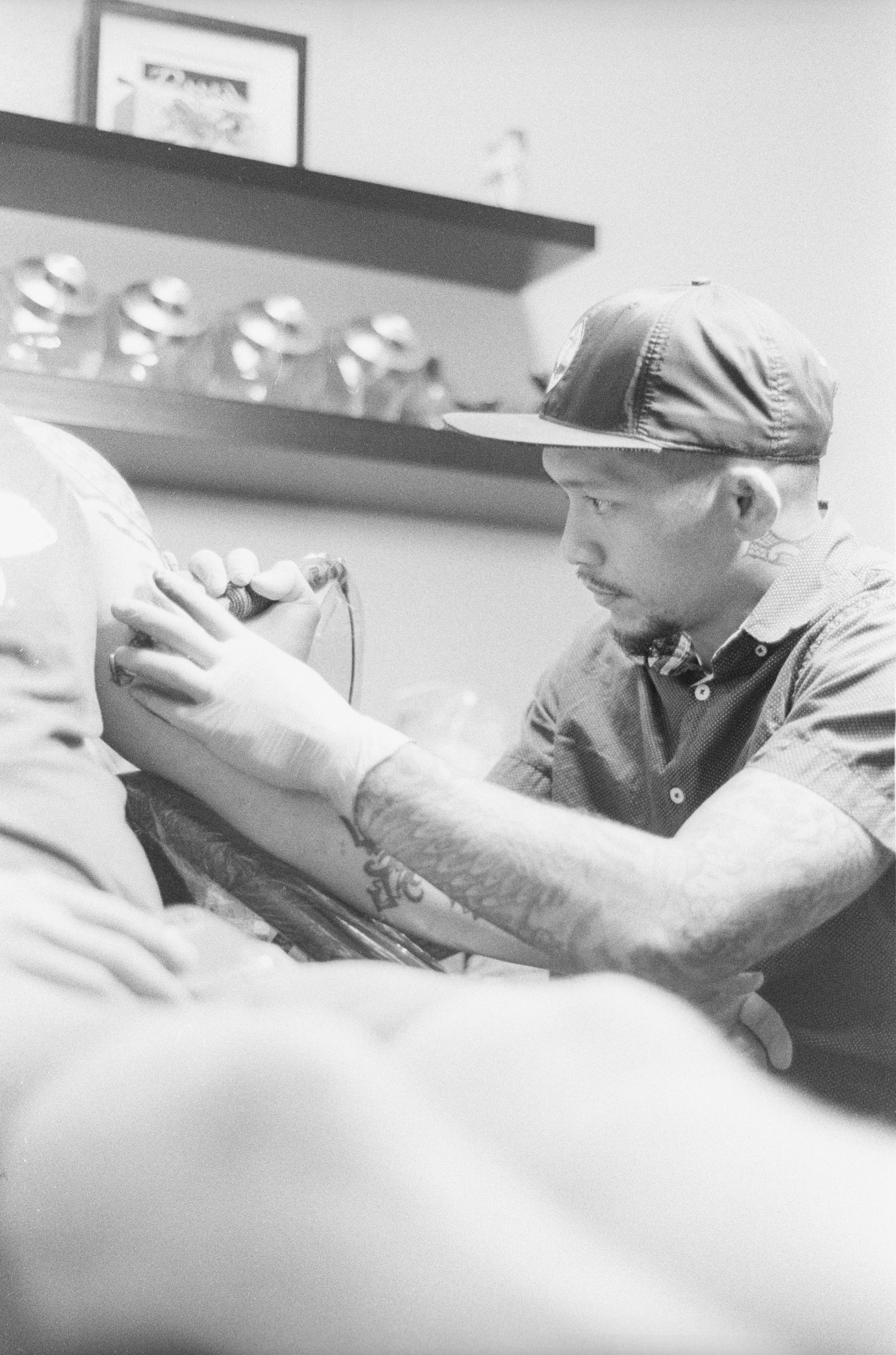
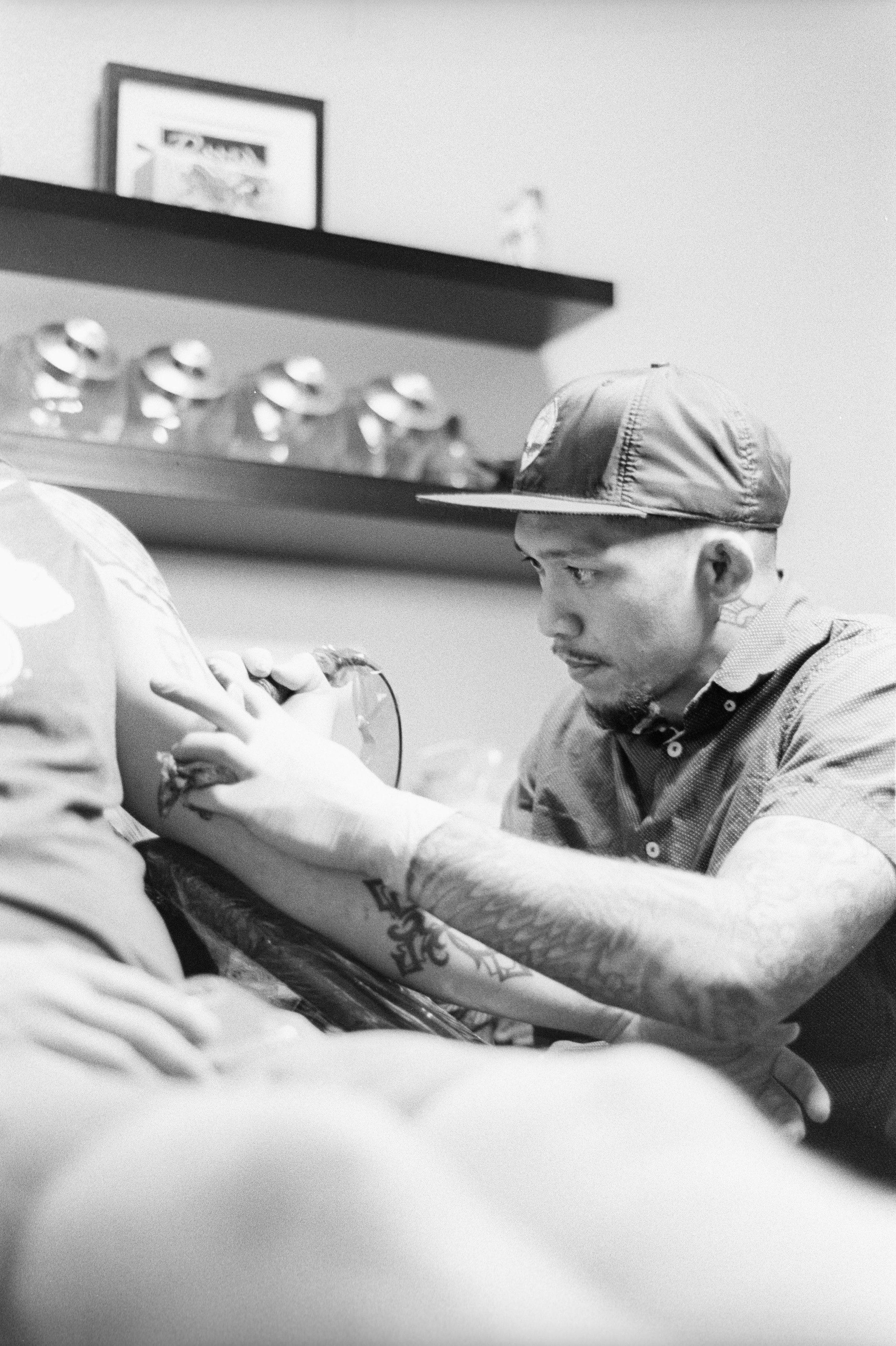
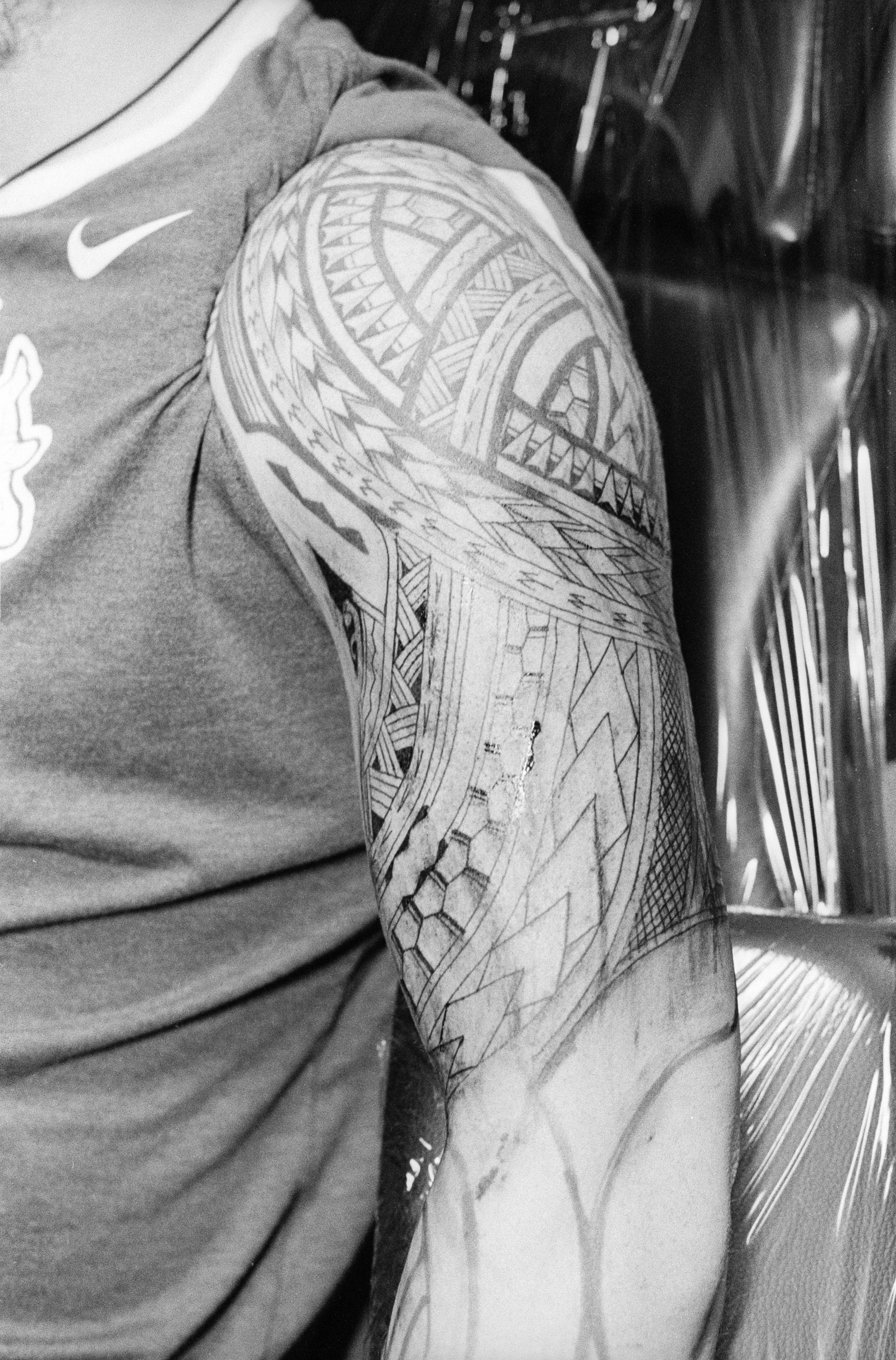
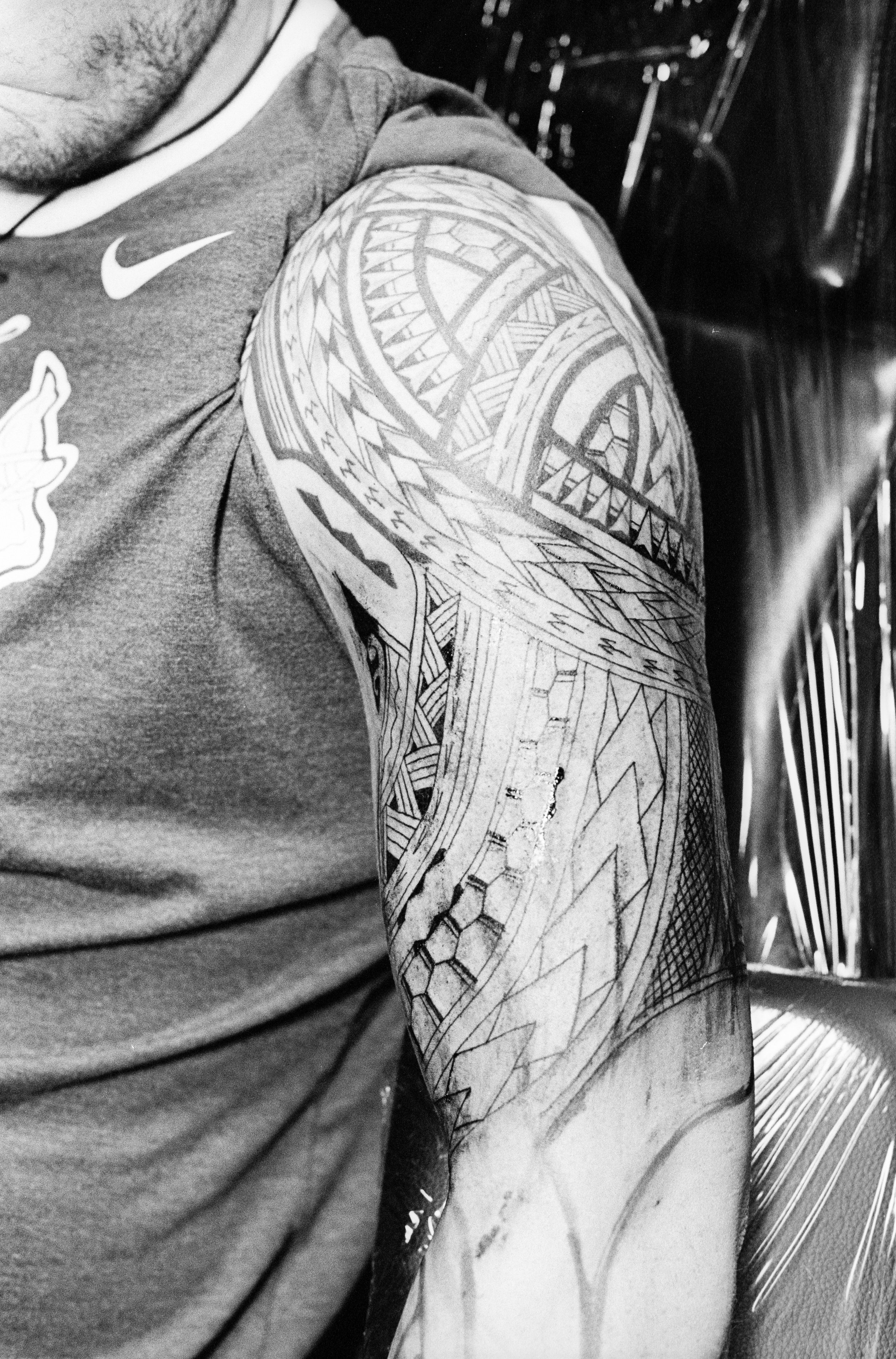
This blog post is meant to act as a supplement to the video linked above where I compared Ilford HP5 Plus and Kodak Tri-X 400. The main purpose of this post is to include images so that you’re able to better see the differences that I mentioned in the video. All images are as scanned and unedited. The first image shows a side by side comparison of the images that you can click on to see it enlarged. The second is a slideshow of the images. The first image will always be of HP5 and the second of Tri-X. Below each image will be the statement that I made in the video in case you’d like to have a reminder of what I said.

For this first image, let’s start with the grain. On my end the grain pattern between these two films are noticeably different. With Tri-X, the grain seems to be closer together, giving it the perception that it is finer. With HP5, I can see a lot more space in between the various textures of the grain. This makes it more noticeable and prevalent in my opinion.

In terms of sharpness, I’ll cover this later with pictures that I think show the differences better.

Contrast. I think between these two images, although the differences are minor, it is noticeable. Tri-X is a more contrasty film. Pretty anywhere that’s in shadow, in this image, the blacks are going to be darker. Looking that the face of the artist with HP5, it almost looks like there’s one shade of grey. While on Tri-x, there are clearly defined shades and tones. You can argue that this is because the artist moved and the face is lit differently but I don’t think anywhere near what these images show. Remember, he’s wearing a hat and realistically, under that bill there should be noticeable shadows. In this situation, I think Tri-X is more true to life.

The same things can be said about this image. Pay attention to the fresh black ink on the client’s arm and the chair that he’s sitting on. The grain is much more noticeable in HP5 while Tri-X is much smoother. Tri-X is again also more contrasty. The dark parts of the chair are black. There’s no detail there with Tri-X while the chair is more of a grey with HP5.

In this third example, look at the shadows around the eyes of the artist. HP5 has lighter shades of grey that largely blend in with each other. Tri-X on the other hand, very apparent differences in tones.

This first image is of a tractor. I think everything that I previously mentioned about grain and and contrast are true here. Grain is less noticeable with Tri-X and it is also contrastier. I wanted to show this image because I’ve noticed that on a general, HP5 seems to produce an overall brighter image than Tri-X and this could be for various reasons. Hp5 could simple be a higher speed film than box rating. The extra brightness could also be because of the lack of contrast. Because the image doesn’t have as many dark tones, I could just be perceiving the HP5 image to be brighter. There are a lot of reasoning to this but in general, I personally perceive Hp5 to produce a brighter image. 

Here’s an image taken at f/1.8. I think if you’re examining grain, a good way to do so is by looking at the bokeh or the out of focus areas of an image. The grain really stands out in both of these images to me. I would still say that Tri-X provides a smoother grain. I would describe HP5’s grain as being clumpier. It’s just spaced out in a way that’s makes it looks like there’s more grain in a particular area. It’s difficult to describe but overall, I believe that Tri-X provides finer, smoother grain.

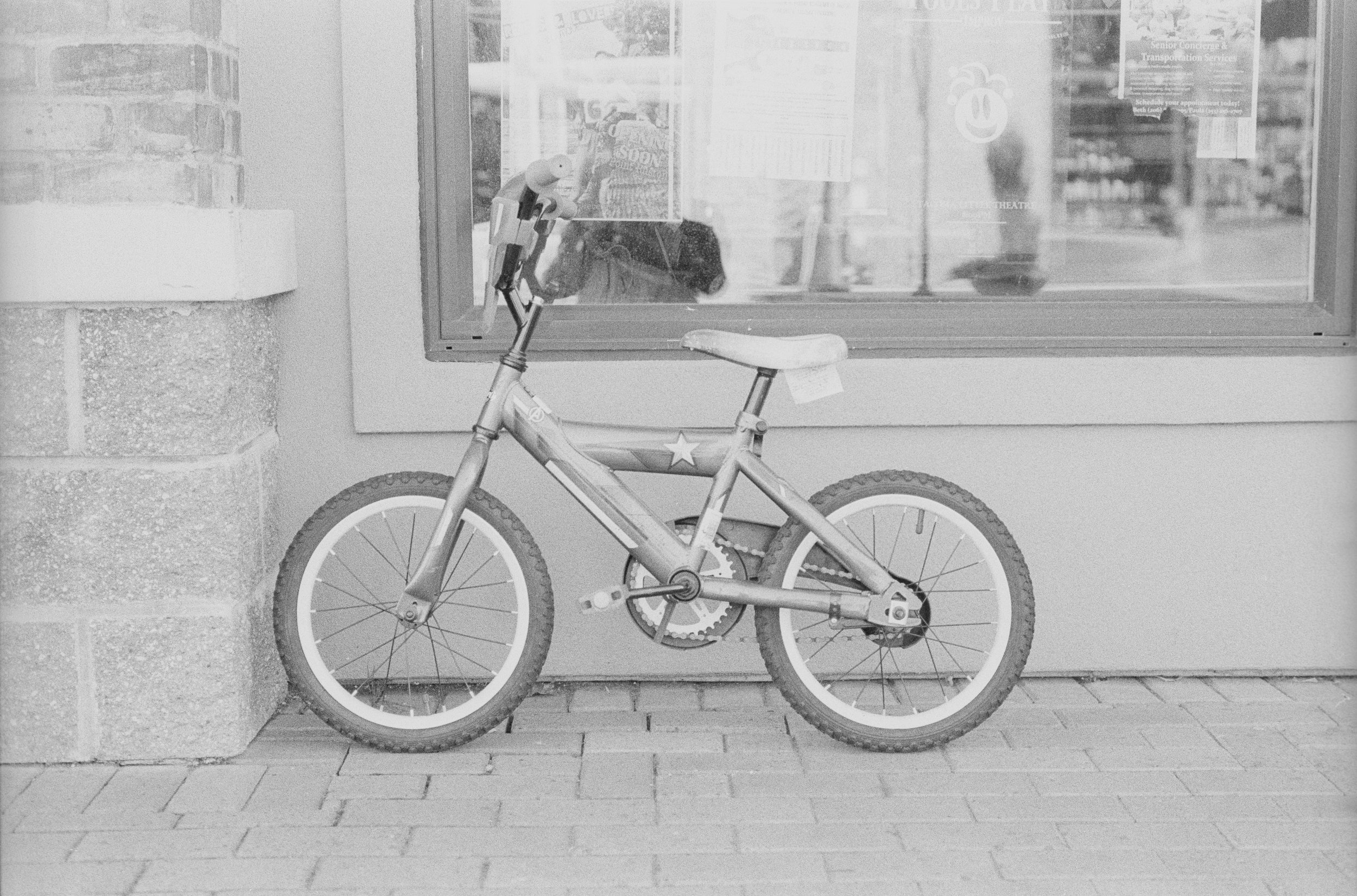
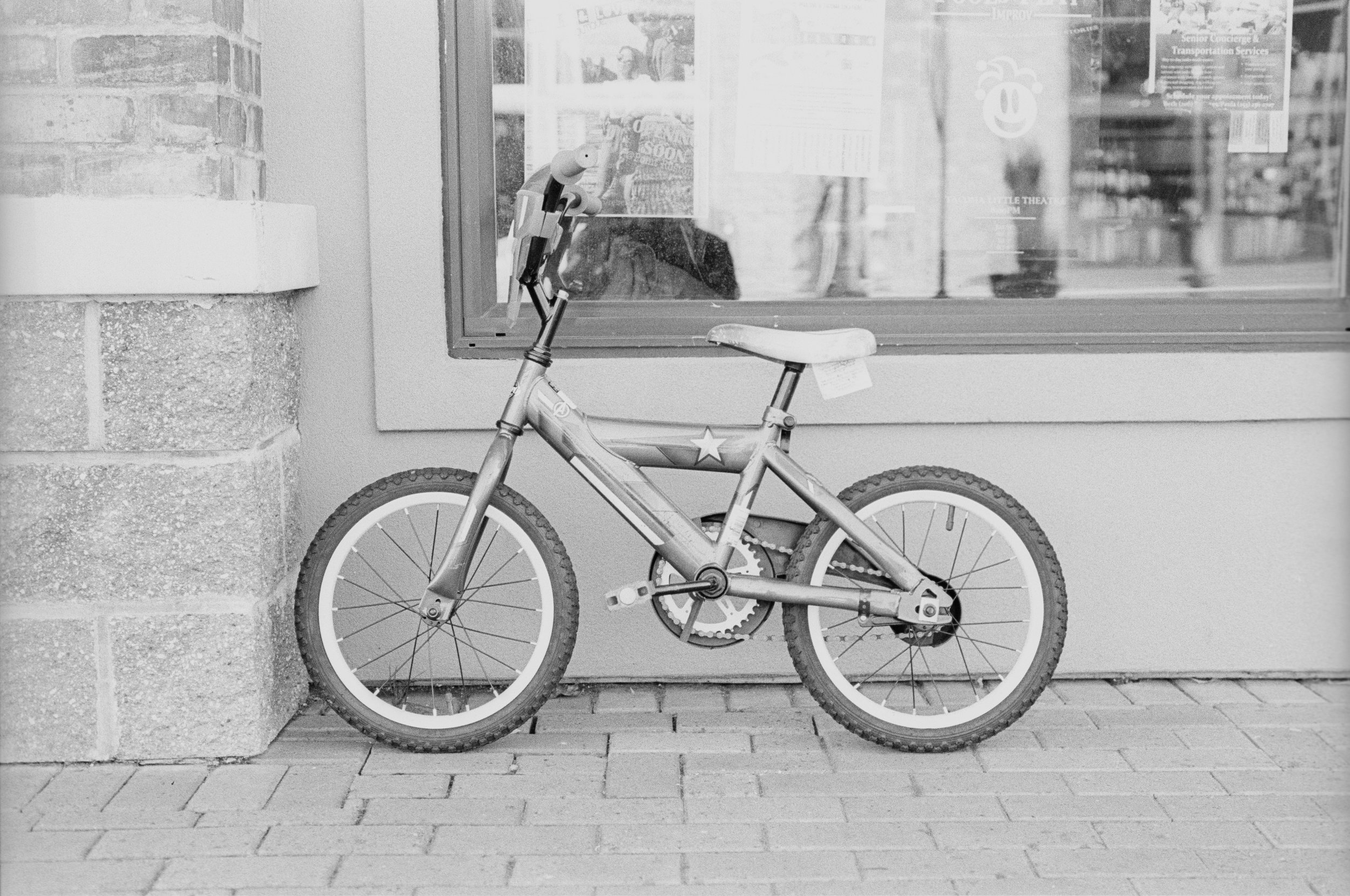
These last few images were taken on a third day at my local waterfront. This first one is a straight forward side profile of a bike. Looking at this image, I notice this difference in contrast right away. Again, Tri-X is much more contrasty. I chose this image because the contrast of Tri-X really makes the bike pop out from the background. There is a clear separation between the bike and the background and that’s because of the dark tones with Tri-X. The HP5 image again, provides more shades of grey than any real blacks. This contrast also really adds to the perception of sharpness. Because the bike stands out so much in the Tri-X, it just seems like it sharper. Your attention is immediately drawn to the bike. I can’t really say this for the HP5 image where the bike just kind of blends in with the wall.

This next image shows the same thing. The extra contrast of Tri-X really helps to provide separation for the boat from the other aspects of the scene like the sky and water. The contrast helps to show depth in the boat. It helps to show that there are surfaces at different distances from the viewer. With the HP5 image, it almost looks like the different surfaces of the boat are on a flat plane. There’s little depth or dimension in the boat.

Here is a portrait style photo of a Chinese lion statue. Focus was set on the right eye and to me there is such a clear distinction between the two images in terms of sharpness. Tri-X looks so much sharper to me than HP5. The lines of the eye is clearly defined compared to HP5. To me, this image shows that Tri-X is a sharper film than HP5 but again, I think the contrast of Tri-X helps with this. The extra contrast helps with the separation between surfaces and provides depth which promotes sharpness.

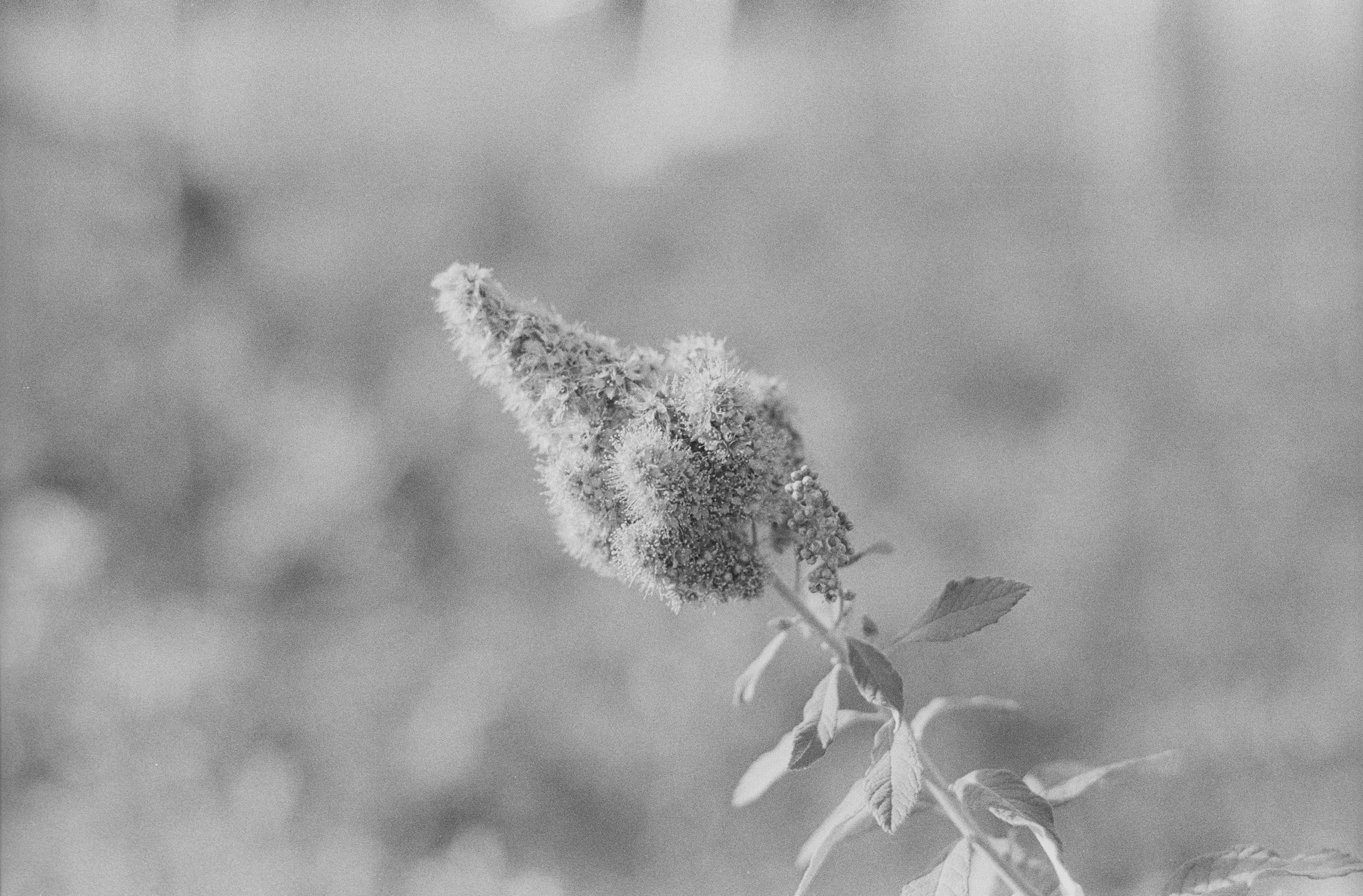
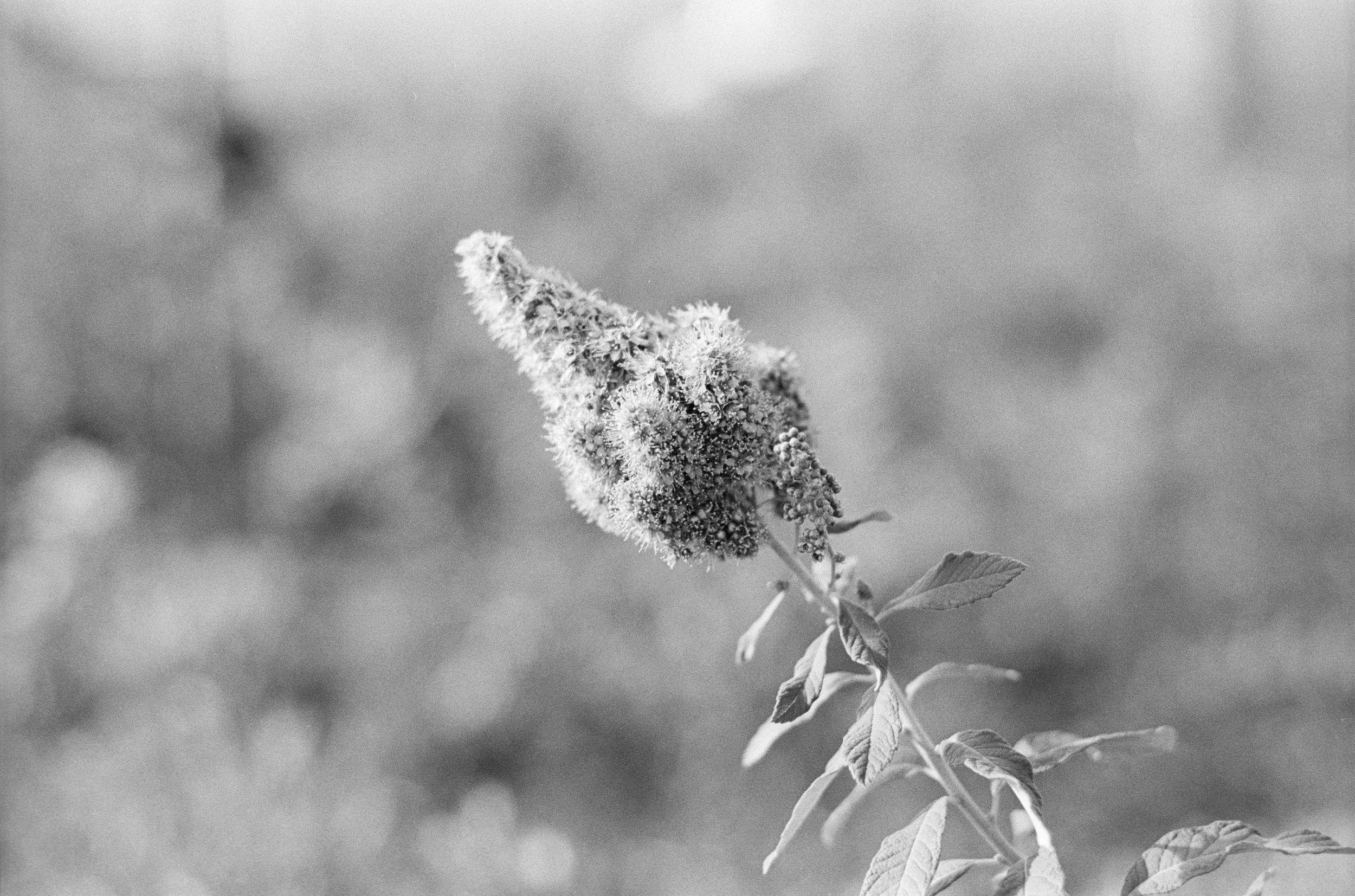
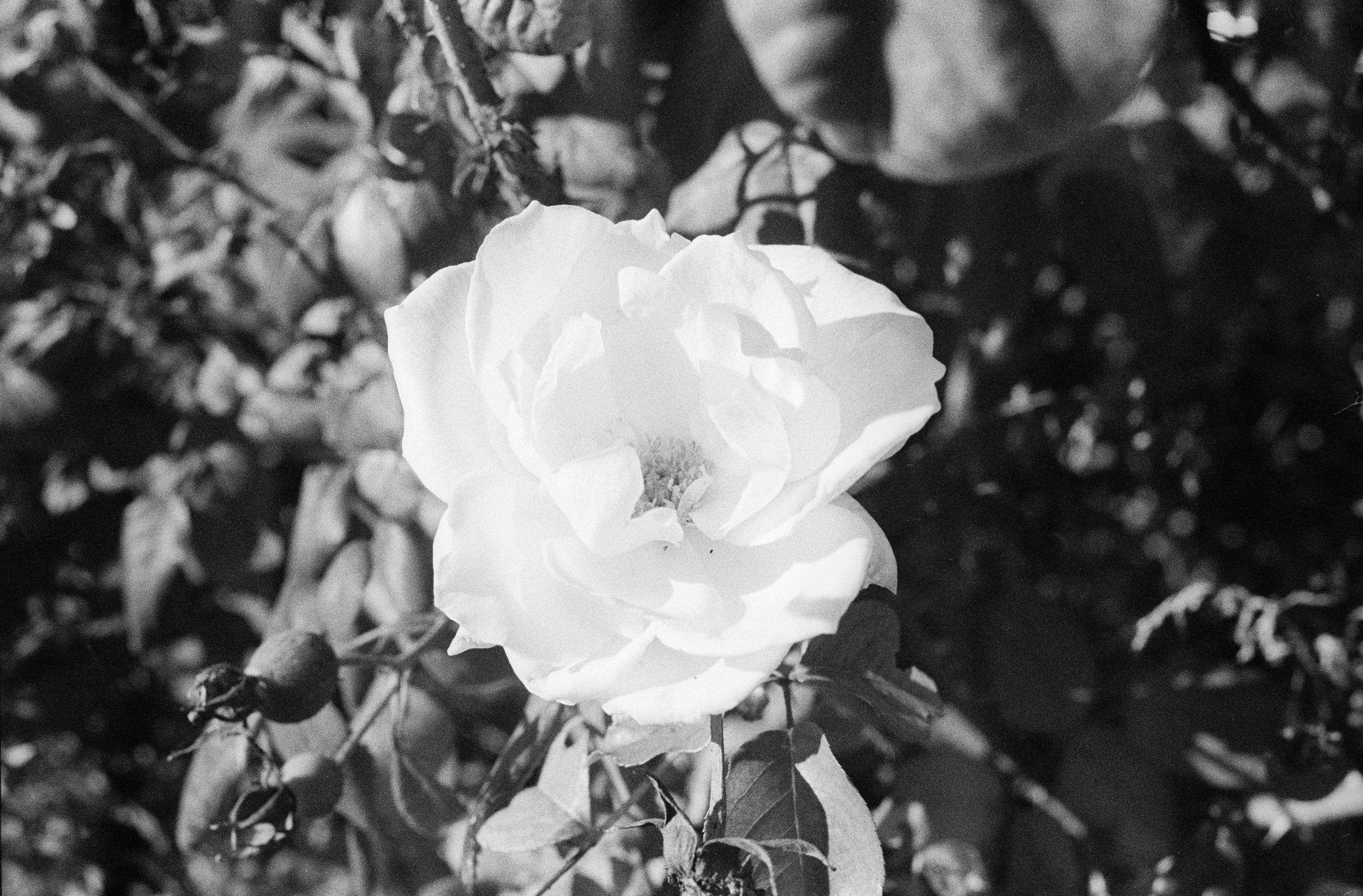
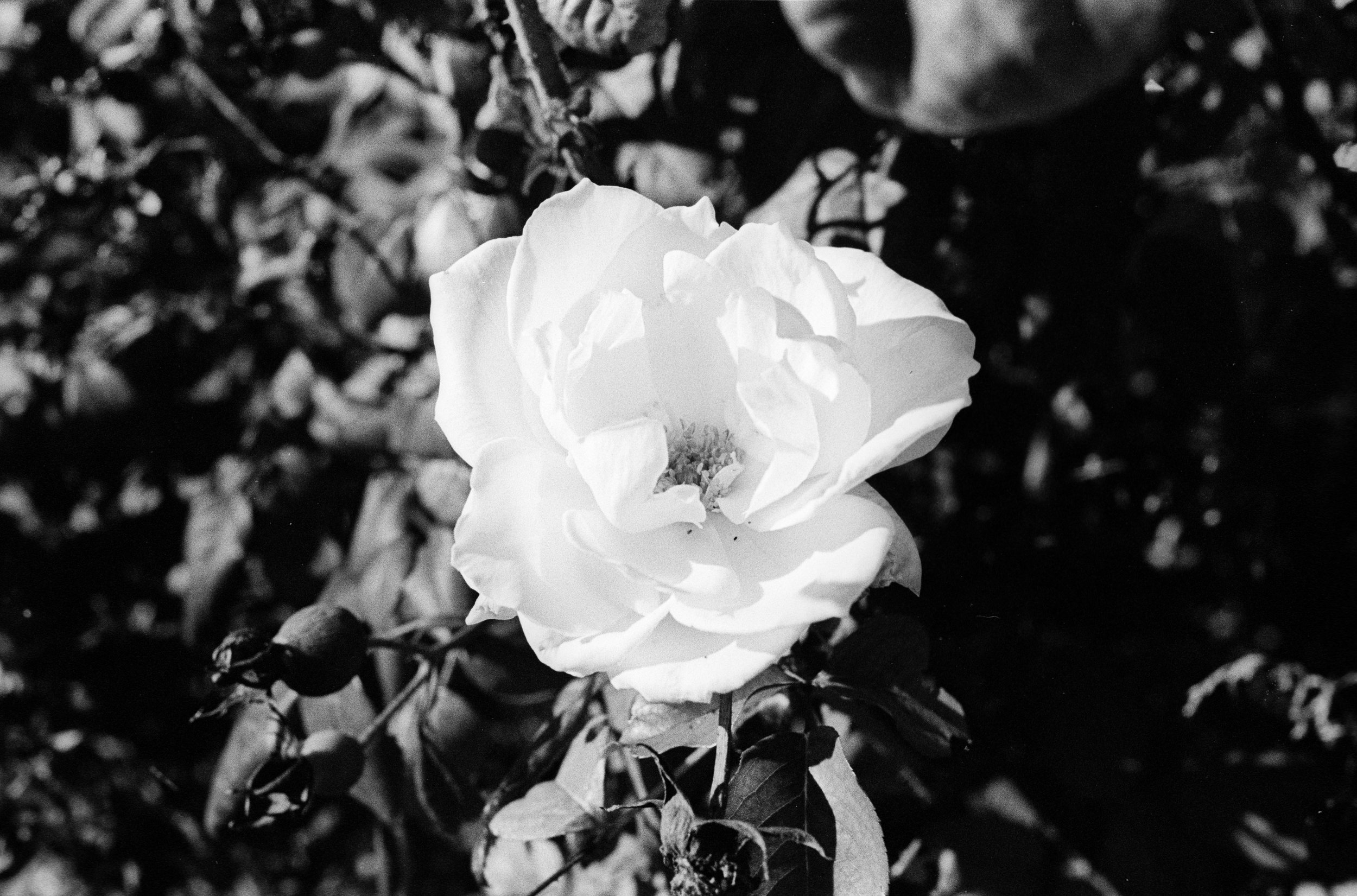
Moving on to the last photo for this comparison. I chose this photo because it really exhibits the stark difference in contrast that you can get with these two films. With this, there’s a white subject on a darker background. In reality, the background really that dark because the entire scene was in direct sunlight but because the branches and leaves grew in layers, there end up being a lot of shadows. With Tri-X, this just translates to a lot of blacks. With HP5, we can see that there is still some detail in the shadows. Because they are a lot more shades of grey, it’s easier to make out that there are different structures in the background. With this, it just depends on what you’re looking for. If you want more detail in the shadows, HP5 will provide you with that while Tri-X provides you with a clear separation between the subject and the background with the use of contrast.


If you're considering on buying any of the products mentioned, please support my work by using the links below.

Ilford HP5 Plus https://amzn.to/2RQ5GN4

Kodak Tri-X 400 https://amzn.to/2pWkM7e

Nikon N2020 https://amzn.to/2PC53oX

Nikon N90S https://amzn.to/2CMR39i

Nikon 50mm f/1.8D https://amzn.to/2CMEPxk

Ilford DD-X Developer https://amzn.to/2PxtUdG

Ilford Ilfostop https://amzn.to/2yFBhIO

Ilford Rapid Fixer https://amzn.to/2CP7QIw


Want to support my work?
Consider visiting the shop and buying "Absolutely Nothing"
https://www.TheUpperLeftUSA.com/shop/absolutely-nothing

or

Become a Patron!
https://www.patreon.com/HaiHoangTran

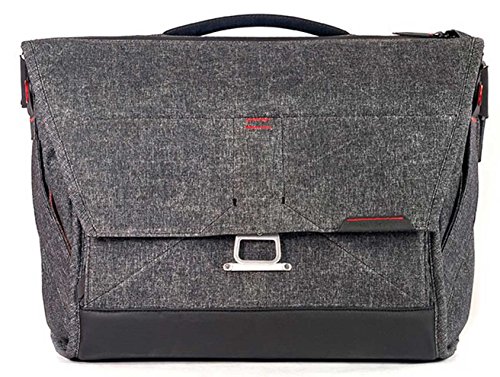
Peak Design Everyday Messenger V2 vs V1


If you're considering on buying any of these products, please support my work by using the links below.

Get 10% off your Peak Design order from the official website by using these links
http://bit.ly/2NFh006
or
https://www.peakdesign.com?rfsn=1824705.61bab1&utm_source=refersion&utm_medium=affiliate&utm_campaign=1824705.61bab1

Peak Design Everyday Messenger V2
https://www.peakdesign.com/products/everyday-messenger/?variant=11616318750764&rfsn=1824705.61bab1&utm_source=refersion&utm_medium=affiliate&utm_campaign=1824705.61bab1

Peak Design Everyday Messenger 15" V1 (Charcoal) https://amzn.to/2MDe7Yu
Peak Design Everyday Messenger Bag 15" V1 (Ash) https://amzn.to/2MD2mRV
Peak Design Everyday Messenger Bag 15" V1 (Heritage Tan) https://amzn.to/2xpIZpP

Peak Design Everyday Messenger Bag 13" V1 (Charcoal) https://amzn.to/2xfe3JI
Peak Design Everyday Messenger Bag 13" V1 (Ash) https://amzn.to/2xiBgdI
Peak Design Everyday Messenger Bag 13" V1 (Heritage Tan) https://amzn.to/2xpDYgW


Want to support my work?
Consider visiting the shop and buying "Absolutely Nothing"
https://www.TheUpperLeftUSA.com/shop/absolutely-nothing

or

Become a Patron!
https://www.patreon.com/HaiHoangTran

Committing to Sony for the near Future


Back when I started doing photography, the choice between camera manufacturers was much simpler. For a newcomer who didn’t know much about the industry, you probably only knew Canon or Nikon. When it was my time to to finally invest in a camera, I did some research but could only go so far because I didn’t know what to look for. I didn’t know the difference between APSC vs full frame, crop factor, or any of those type of technical aspects. I think ultimately what I did was compare spec sheets i.e. this camera has so many megapixels and has these features while this other camera doesn’t. Which ever one had what I thought was the best features win. 

I specifically remember wanting the Canon 6D. I thought that this was the best camera at the time without going overboard with the much more expensive 1D line. But I ultimately decided against the 6D because the cost to start with this camera was too high. I really wanted to stay within a certain budget because I didn’t know how long this hobby would last. Ultimately, I decided on the Nikon d5300 and I picked up a 35mm lens because that’s what many Youtubers recommended for beginners to get (I was very impressionable back then). Again, I didn’t know what crop factors were and if you understanding what I’m getting at, a 35mm lens doesn’t exactly act like a 35mm on my APSC d5300.

Later down the line, I decided to upgrade to the Nikon D810 and this camera changed my career. Some of my best and most memorable shots were taken on this camera and I can’t say enough about the things that this camera is capable of. Even today, 4 years old and I would say that this camera still ranks among the best for stills photography. In capable hands, really anything can be accomplished with this camera. 

That being said, while the d810 was gaining praise and winning all types of awards, there was a storm brewing. Sony had entered the full frame mirrorless industry and was gaining attention for the A7S and A7R. Personally, I could care less because I loved my D810. This all changed with the introduction of the Sony A7RII that featured a full frame sensor, 42mp stills and 4k internal recording. At this point, I was dabbling with video and a felt that I just couldn’t do what I wanted with my Nikon gear. The A7RII not only was able to keep up with the d810 for stills, it was better in my opinion and of course just completely obliterated it when it came to video capabilities. So I bought the A7RII and have been using it for the past few years. 

In October of 2017, Sony announced the A7RIII and I quickly got rid of my A7RII before the value depreciated too much and purchased the A7RIII and that’s where I’m at now. But 2018 is turning out to be a very interesting year for the camera industry. Canon and Nikon have already announced their first full frame mirrorless cameras and Panasonic is expected to join very soon. Knowing this, I recently sold off all my own camera gear, leaving only the bare minimum that I need to create content in preparation for a possible camera system switch. But after doing this and seeing everything that will be releasing, I think I’ve decided to stick with Sony, at least for the near future. 

Let’s talk about some of the things that I really want in a camera and camera system.

  • Full frame

  • 24 or more MP

  • IBIS

  • 4k60p

  • Above everything else is a 24-70mm f/2.8 lens (or something similar)

Currently there are no cameras that has everything that I want. The Nikon Z has no 4K60p or 24-70 f/2.8. The Canon R has no IBIS or 4k60P but does have the 28-70mm f/2. Sony has n 4k60p but has everything else that I want. So as of right now, the Sony system just ticks off the most boxes. 

I mentioned earlier that Panasonic is going to be going the full frame mirrorless market and they’re reportedly doing so as a joint venture with Leica and Sigma. They are to launch 2 cameras at Photokina, one with lower resolution and the other with resolution around 50 mp. Both will have 4k60p, IBIS and the cameras will launch with a 24-70. Just based on the things that I want, the Panasonic sounds perfect but of course there’s a lot more to a camera system than just these 5 things. I’m really intrigued in this new camera system but ultimately, I don’t think I’ll be able to switch to it because the cameras are rumored to ship in March 2019. I just can’t wait this long for a new camera. I have weddings and other work in the mean time and need a camera so logistically speaking, I have to stick with Sony for the near future. At least until all these new cameras are readily available on the market and I’m able to try them out. I have no personal attachment with any company and will use any camera that works best for my work. 

At least I’ve put myself in a pretty good position I were to make a brand switch. I currently only own one body and one lens, and borrow an A7RII when needed. If I needed to sell the rest of my gear, it’s not as drastic as someone who’s really invested into a system. At least for the next few months, I will be using Sony mirrorless cameras and I can’t really complain too much as Sony mirrorless cameras are among the best right now.


If you're considering on buying any of these products, please support my work by using the links below.

Sony A7RIII https://amzn.to/2x6dyjY
Sony A7III https://amzn.to/2oZPITj
Sony FE 24-70mm f/2.8 GM Lens https://amzn.to/2p44Zmt
Nikon Z6 https://amzn.to/2x4N4iT
Nikon Z7 https://amzn.to/2x4yPuy
Canon EOS R https://amzn.to/2x4YmUt
Fujifilm XT3 https://amzn.to/2oYaNOc


Want to support my work?
Consider visiting the shop and buying "Absolutely Nothing"
https://www.TheUpperLeftUSA.com/shop/absolutely-nothing

or

Become a Patron!
https://www.patreon.com/HaiHoangTran